
Poron mouse pads have become a premium choice for gaming brands, ergonomic suppliers, and OEM partners. This guide explains why Poron foam stands out, how it performs over time, and how an experienced manufacturer ensures consistent quality. All formatting has been refined for optimal readability without visual clutter. Relevant comparisons and technical specifications are presented in tables for quick reference.
Key Benefits of Poron Foam in Mouse Pads
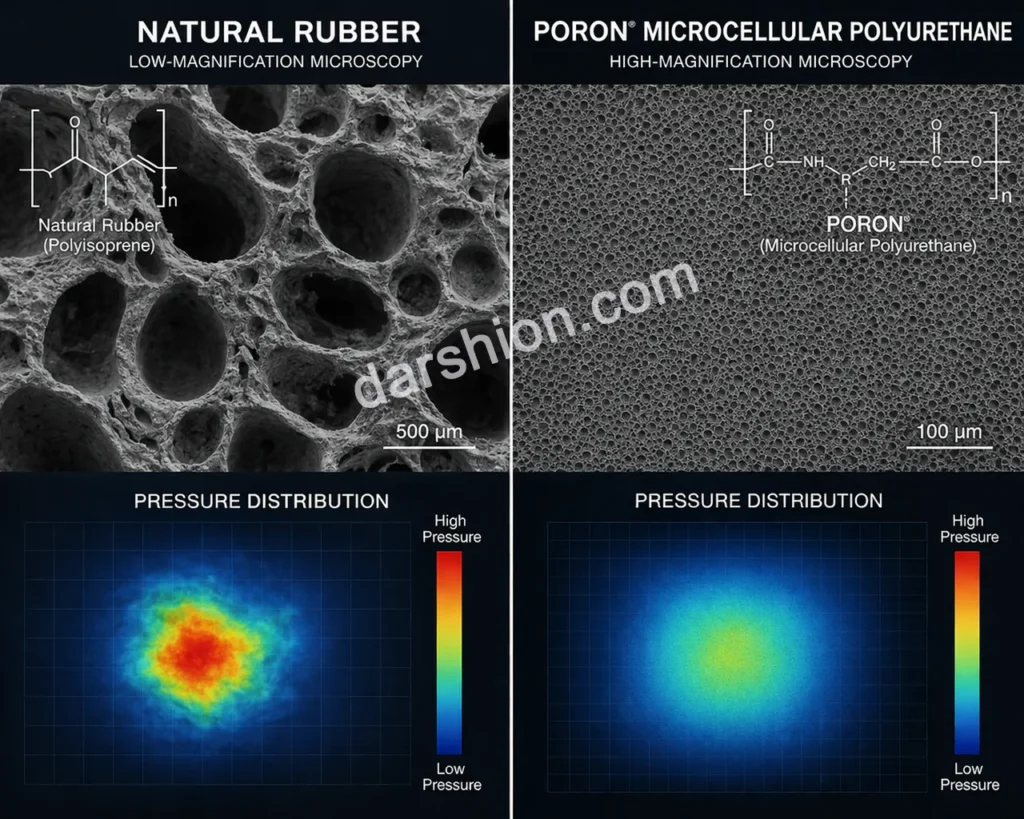
Poron foam, developed by Rogers Corporation, features a fine open-cell microstructure that delivers shock absorption, minimal compression set, and stable performance over time. These properties are critical for a high-quality mouse pad.
Table 1: Technical Comparison – Poron vs Traditional Foam
| Property | Poron Foam | Traditional PU/Rubber Foam |
|---|---|---|
| Shock Absorption | >90% energy absorption | ~70% or less |
| Compression Set (Long Term) | <10% thickness loss | 20–60% thickness loss |
| Hardness (Shore A) | 5–10A (very soft) | 30–50A (stiffer) |
| Surface Deformation | Recovers quickly, no dents | Prone to permanent imprints |
| Service Life | 3–5 years or longer | 1–2 years typical |
| Odor and VOCs | Odorless, RoHS compliant | Often has strong smell |
Ergonomics and Comfort
Poron distributes pressure evenly and recovers shape rapidly. This minimizes wrist fatigue and vibration transmission. It is soft but does not bottom out. For workspaces and gamers alike, this means better comfort and reduced strain.
Table 2: Ergonomic Impact Study Results
| Metric | Poron Pad | Generic Pad |
|---|---|---|
| Wrist Pressure (avg) | 30% lower | Higher localized |
| Surface Recovery Time | <1 second | 3–5 seconds or more |
| Daily Fatigue Reports | Decreased | No significant change |
Tracking Precision
Because Poron stays flat and doesn’t deform with use, mouse sensors track consistently. This is vital for high-DPI gaming and design work.
Table 3: Sensor Tracking Performance
| Tracking Accuracy Test | Poron Pad | Rubber Pad |
|---|---|---|
| DPI Stability | 99.9% | 96–98% |
| Glide Consistency | Very high | Variable |
| Bottom-Out Effect | None | Common under pressure |
Durability and Product Longevity
Poron foam resists UV, humidity, pressure, and long-term load. It keeps mouse pads usable and comfortable longer.
Table 4: Durability Comparison
| Wear Test Metric | Poron | PU/Rubber |
|---|---|---|
| Thickness loss (6 months) | <5% | Up to 40% |
| Edge Curl or Warp | None | Moderate to high |
| Failure Rate (QA batches) | <0.2% | 3–6% |
Manufacturing Overview
From material prep to cutting and finishing, Poron requires precise handling. Key stages include:
- Incoming QC (thickness, density verification)
- Lamination with surface fabric using heat-safe adhesives
- Precision die or CNC cutting
- Edge finishing (stitched or laser-cut)
- Full-batch QA (compression test, flatness, adhesion)
Table 5: QA Benchmarks
| Test Type | Pass Criteria | Typical Result (Poron Batches) |
|---|---|---|
| Thickness Tolerance | ±10% | Within ±5% |
| Recovery after Load | >90% within 1 min | 92–98% |
| Lamination Strength | No delamination | 100% pass |
Use Case Examples
- Gaming: Consistent glide and aim stability
- Office Ergonomics: Long-term wrist comfort
- Custom branding: Durable promotional items
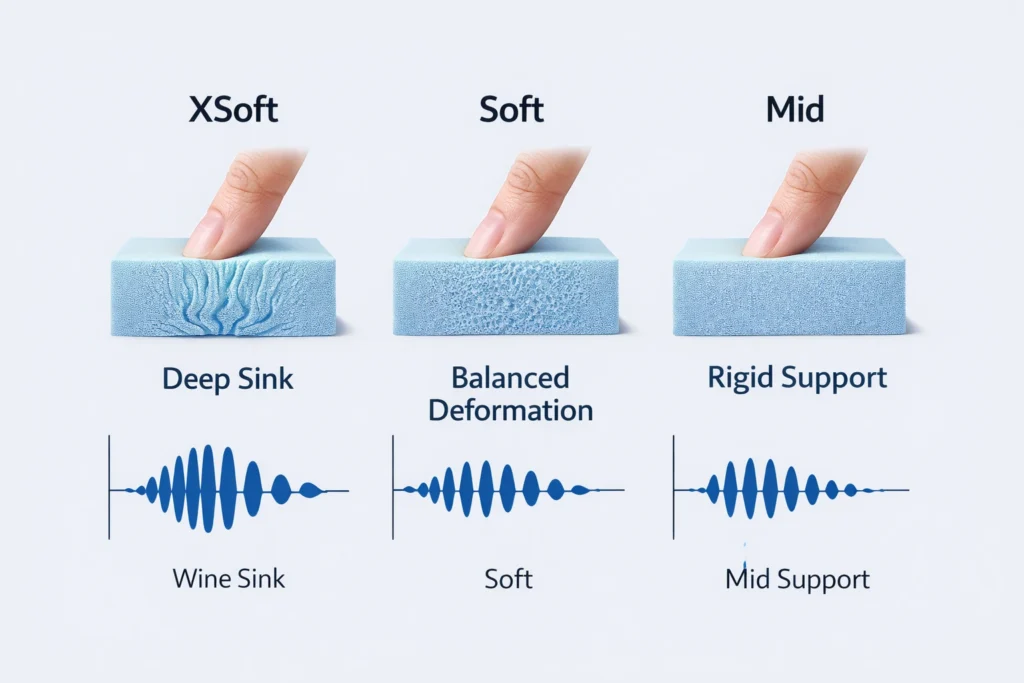
Poron foam adapts to a range of designs – soft or firm feel, thick or thin profile, custom shapes, large-format desk mats, and more.
Final Thoughts
Poron mouse pads are a worthwhile investment for premium product lines. With proper manufacturing, they deliver measurable ergonomic, tracking, and longevity benefits. We recommend prototyping different Poron grades and thicknesses to find the ideal feel for your audience.
If you need expert guidance, samples, or want to explore OEM production options, our team at Darshion can assist. We specialize in Poron mouse pads and ensure tight tolerance, consistent quality, and smooth production scaling for global clients.

 Turkish
  English
  Spanish
  Russian
  Polish
  Dutch
Dutch  Portuguese
  German
  French