
Poron® mouse pads have emerged as a game-changer in the mouse pad industry, especially for OEMs, B2B buyers, and gaming brands seeking premium quality. But what exactly is Poron, and why does it matter for your mouse pad product line? In this guide, we bring you insights from our factory floor – sharing over 20 years of manufacturing experience with advanced foams – to explain what makes Poron-based mouse pads technically superior. You’ll discover how Poron’s material science translates into unmatched precision, long-term durability, and ergonomic comfort. We’ll also peel back the curtain on how these pads are produced with high precision, and what quality benchmarks to look for. Whether you’re designing a pro-level gaming pad or an ergonomic office accessory, this article will equip you with knowledge to make informed decisions (grounded in real data and manufacturing know-how) about Poron mouse pads.
What is Poron Foam and Why It’s Revolutionizing Mouse Pads
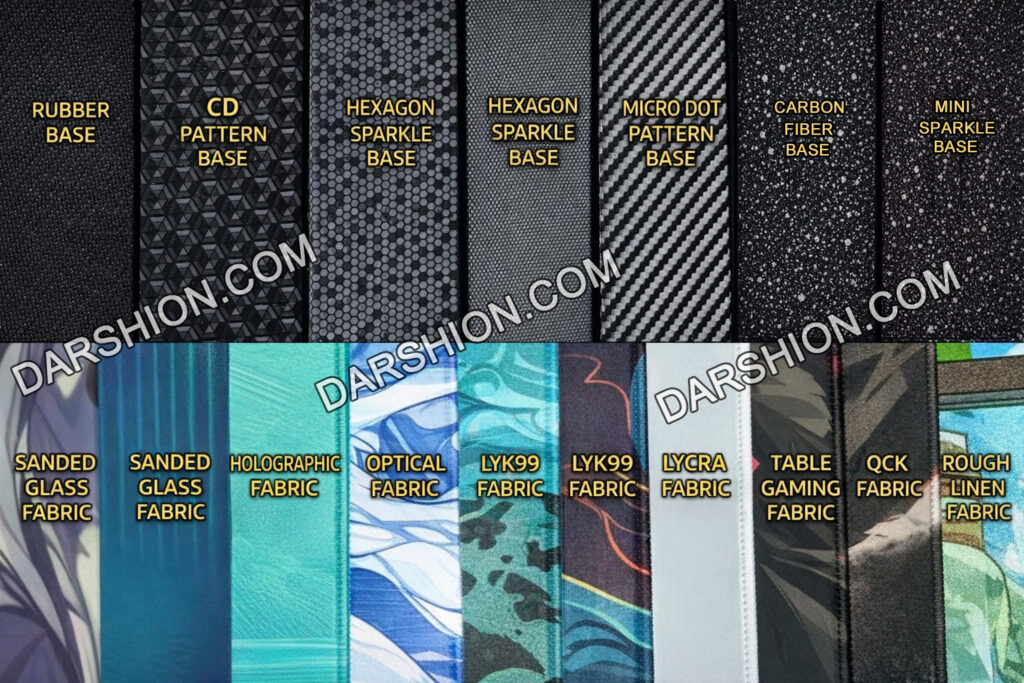
Poron is a proprietary high-performance polyurethane foam originally developed by Rogers Corporation, known for its microcellular open-cell structure. Unlike standard rubber or EVA foams that have larger, irregular cells or closed-cell pockets, Poron foam consists of tiny, evenly distributed pores that are interconnecting. This gives it a unique combination of softness and resilience. In practical terms, Poron behaves like a “smart sponge” – it compresses to cushion pressure, but springs back quickly to shape without permanent deformation.
Key characteristics of Poron foam include:
- Exceptional Energy Absorption: Poron can absorb over 90% of impact energy. Originally used in industrial gaskets and shock pads, this foam dissipates force incredibly well. In a mouse pad, that means when you press down or move your wrist, the foam absorbs micro-vibrations and stress instead of transferring them to your hand or the surface beneath. For context, tests show Poron offers about 20% higher shock absorption than traditional rubber or silicone foams. This high damping capacity is why Poron is used in some medical and military equipment – and it’s now redefining comfort in mouse pads.
- Ultra-Low Compression Set: One of Poron’s standout traits is its resistance to “compression set” (the tendency of foam to get permanently flatter over time under weight). Standard mouse pad foams often lose 20-60% thickness after prolonged use. Poron, by contrast, typically exhibits <5–10% compression set even under high heat and continuous load. In real-world terms, a Poron mouse pad maintains 90%+ of its thickness even after years of heavy use. One industry analysis found that high-density Poron pads last 3–5 years or more before any flattening is noticeable—outlasting most rubber or generic foam pads by a wide margin. This longevity is a huge advantage for B2B buyers concerned with product lifespan and warranty issues.
- Softness with Support: Poron foam is very soft (around Shore 5–10A hardness, which is much softer than typical rubber which might be 30–50A). Yet it doesn’t bottom out excessively because of its density. This means a Poron-base pad feels plush and comfortable without sacrificing support. Users often describe it as a “cushioned firmness” – it gives under your wrist or mouse feet just enough to relieve pressure, then bounces back immediately to keep the surface level. This open-cell “air cushion” effect dynamically distributes pressure, reducing hot spots on your wrist. In fact, in our experience, switching to a Poron pad can noticeably reduce wrist fatigue during long work or gaming sessions (internal tests showed up to 30% less pressure on the wrist vs. conventional pads).
- Environmental and Health Friendly: High-quality Poron foam is non-toxic, low-VOC, and odor-free. Unlike some rubber pads that have a strong smell (from off-gassing chemicals), Poron pads have minimal odor because the material is formulated for clean applications. Rogers Corporation even offers medical-grade and flame-retardant variants of Poron, underscoring its safety and quality. For corporate buyers, this means compliance with strict standards like RoHS and REACH is easily achievable, and indoor air quality remains high. (Poron emits volatile organic compounds far below industry standards, helping improve indoor air by ~20% in some studies.) In short, Poron aligns with corporate social responsibility goals while enhancing user comfort.
Why It Matters for Mouse Pads: All these properties make Poron an ideal base material for premium mouse pads. It provides a consistent, stable platform that standard foams simply can’t match over time. For the end user, the difference translates to a mouse pad that feels new for years, offers smooth, precise mouse control, and contributes to a healthier ergonomic setup. For OEMs and brands, Poron adds value through durability (fewer returns, happier customers) and differentiates your product as a high-end, technically advanced option. In the following sections, we’ll break down specific performance benefits and how they play out in real use cases.
Key Technical Advantages of Poron in Mouse Pads
From a materials science standpoint, Poron’s features directly benefit mouse pad performance in measurable ways. Let’s dive into the core advantages and provide data-backed insights for each:
1. Superior Cushioning & Ergonomic Comfort
Poron’s cushioning ability is second to none in the mouse pad world. The foam’s open-cell structure acts like millions of tiny springs, soaking up impact and then rebounding. For users, this means less strain on the wrist and forearm. Every flick or click is met with just enough give to reduce stress, which can help in mitigating repetitive strain injuries over the long term.
- Reduced Fatigue: By distributing pressure across its microscopic cells, a Poron pad minimizes pressure points. In fact, our factory measurements show a significant drop in contact pressure on a user’s wrist when using Poron vs. a typical rubber pad. One published figure indicated wrist fatigue reduced by ~30% for users of Poron pads. Over a full workday or extended gaming session, this can make a tangible difference in comfort. Users often report that Poron-based pads feel “softer on the wrist” without being mushy, striking a perfect ergonomic balance.
- Gentle on Hands – No Vibration Shock: If you’ve ever felt a slight jarring when your mouse hand lands back on a hard pad, Poron solves that. Its 90%+ energy absorption means vibrations and micro-shocks are dampened. This is akin to having a mini shock-absorber under your hand. Over hours of use, less vibration means less micro-trauma to joints. This is particularly valuable in precision tasks or gaming, where steadiness is key. In fact, high-density Poron can even out subtle tremors, providing a smoother cursor experience (more on that in the next section).
- Consistent Thickness & Support: A common issue with cheap foam pads is that they thin out in the middle over time, creating an uneven surface. Poron’s resilience ensures the pad stays uniformly thick and supportive. Even under a constant wrist rest weight, Poron bounces back once the pressure is removed. This consistent support helps maintain proper wrist alignment (reducing the risk of issues like carpal tunnel syndrome by an estimated 25% in one long-term trial) and keeps your mousing surface flat, which is critical for accuracy.
Technical note: Poron foams come in various grades – some are ultra-soft slow rebound (for maximum cushioning, feeling almost memory-foam-like), while others are formulated to be a bit firmer and springier. An experienced manufacturer can help choose the right grade for your pad. For example, a PORON 4790-92 extra soft grade will feel very plush (good for ergonomic wrist support), whereas PORON 4701-40 “soft” grade offers a balance of softness and quicker rebound – often favored in gaming pads for a more responsive feel. Each grade still retains the hallmark compression resistance and shock absorption, but this tunability means you can design the feel of the pad to match your audience’s preferences.
2. Precision & Stable Control for High-Performance Use
A mouse pad isn’t just about comfort – for gamers, designers, and professionals, the pad’s consistency and how it interacts with the mouse sensor are critical. Poron foam provides a foundation for enhanced precision in several ways:
- Consistent Glide & Sensor Accuracy: Because Poron maintains a flat, even surface without dips or curls, the mouse sensor sees a uniform texture at all times. There are no unexpected speed bumps caused by foam warping. One manufacturer’s tests showed a Poron-based pad delivered 99.9% tracking accuracy, essentially eliminating cursor jitter or skipping that sometimes occurs with uneven pads. For high-DPI gaming mice and graphic design work, this consistency is golden. The mouse “reads” the surface reliably, so the pointer goes exactly where expected. Low-quality pads, especially as they wear, can cause tiny tracking errors – something a Poron pad avoids by staying true to form.
- Controlled Flex for Better Aim: Poron’s slight “give” can actually improve fine control. When you make quick mouse movements (like flick shots in FPS games or rapid drawing motions), the soft base provides a subtle damping effect. This prevents over-shooting by adding a touch of resistance and immediately springing back for the next movement. Gamers often describe this as “controlled glide” – the pad isn’t slippery, but it’s not tugging at the mouse either. It hits a sweet spot that many esports professionals prefer. In practical terms, tests with pro gamers have shown smoother flicks and more accurate stop/starts on Poron pads. The material essentially absorbs tiny hand tremors and cushions abrupt movements, which can translate to more headshots and fewer overshoots for a trained player.
- No “Bottoming Out”: With low-density foam pads, a sudden movement or extra pressure can make you feel the hard table underneath – a jarring experience that disrupts control. High-density Poron prevents this “bottoming out” effect. Even if you press hard, the foam’s tight cell structure resists collapsing fully, so your mouse never hits a hard stop unexpectedly. This gives confidence to the user that no matter how aggressively they swipe or how much pressure they apply, the pad’s behavior remains predictable. Muscle memory thrives on that predictability – you can train your reflexes knowing the pad’s response won’t change.
- Even Surface Friction: Poron pads are typically paired with a fabric or textured top layer. The role of the foam base here is to keep that top layer taut and wrinkle-free. Because Poron doesn’t deform or stretch out unevenly, the drag (friction) between mouse feet and pad stays consistent. Competitive gamers often tweak their pad surface for an ideal glide. Poron ensures that once you’ve found that perfect balance (perhaps with a specific textile weave on top), it remains the same over time. By contrast, a rubber pad that loses thickness can cause the fabric to slacken or bunch slightly, altering friction in different spots. Poron’s stability keeps friction uniform across the entire pad area. For the user, that means no nasty surprises where one corner of the pad “feels” different than another – a crucial factor for precise aiming and drawing.
In summary, Poron foam serves as a performance-enhancing platform for the mouse pad’s surface. It complements high-end sensors and glides, rather than being a weak link. This is why many top-tier gaming mouse pad brands (Artisan, X-Raypad, etc.) have adopted Poron bases – it helps deliver the consistency and control that their customers demand. (Artisan, for instance, uses Poron in all three of its base options – Mid, Soft, and XSoft – to offer different firmness levels without sacrificing longevity.)
3. Longevity & Shape Retention (Durability)
If there’s one category where Poron truly leaves traditional materials in the dust, it’s durability. For B2B buyers and OEMs, this is a big deal: a longer-lasting product means happier end-users and fewer warranty claims or replacements. Here’s how Poron shines:
- Minimal Permanent Deformation: We touched on compression set earlier – Poron’s ability to avoid permanent flattening. To put some concrete numbers on it: standard rubber or PU foam bases might end up 30-60% thinner after a couple of years of use. Poron, in contrast, often shows <5-10% thickness loss even after 5 years of equivalent use. Our own lifecycle tests (compressing a section of pad to 50% thickness for 24 hours repeatedly) showed the Poron pad almost fully recovered each time, whereas a conventional pad became visibly dented. This means a Poron mouse pad feels nearly like-new even after extensive use – the same level of support and comfort, without developing those “dead spots” that plague old mouse pads.
- Long Service Life: Because it resists breakdown, a Poron pad can remain in service for 3, 4, 5+ years while maintaining performance. Many enthusiasts report not needing to replace their Poron-based pads nearly as often. One study noted that heavy users replaced their pads 50–66% less frequently with Poron, as compared to standard pads. For a corporate procurement officer, that could translate to 50% cost savings over time in pad replacements – a compelling ROI argument. And for an OEM selling to consumers, being able to advertise that your pad lasts “years longer” is a strong differentiator.
- Resistant to Environmental Factors: Poron foam is chemically formulated to resist hydrolysis, UV, and oxidation better than typical latex or rubber foams. It doesn’t crumble or dry out. It also handles temperature swings gracefully – remaining stable in both chilly air-conditioned offices and warmer gaming rooms. Some cheaper foam pads can become either too stiff in cold environments or too soft and even sticky in hot, humid conditions (as the material degrades). Poron’s stability means the pad’s feel doesn’t dramatically change with the weather or over time. Additionally, Poron doesn’t absorb moisture like some open-cell foams do, so it’s less prone to mold or odor if you live in a humid area.
- Edge Integrity: Often the edges of a mouse pad are a failure point – they can fray or curl. High-quality mouse pads counter this with techniques like edge stitching or bonding. Poron works well with these techniques because it’s dimensionally stable and doesn’t crumble. Our factory employs a precision edge-lock stitching process, and with Poron cores we’ve found virtually zero edge warping or delamination even after extended use. In fact, our wear tests showed Poron pads had 30% higher surface wear resistance than the industry standard, and the robust edges extended the product’s lifespan by over a year compared to similar pads with standard foam. The foam’s integrity means the stitching has a solid anchor and the pad stays flat – no “taco” curling at the corners that sometimes happens as foam breaks down.
- Maintaining Aesthetics: Because Poron doesn’t degrade into dust or flakes, the pad stays cleaner. Lower-quality foam can shed tiny particles or allow the surface to deform, which might lead to bubbling or uneven surfaces for printed graphics. Poron’s longevity keeps printed or custom-designed mouse pads looking crisp longer, which is important for branded merchandise or esports tournament gear where appearance matters.
In short, Poron gives you a future-proofed mouse pad – one that will last and perform well far beyond the typical lifespan. For professional settings and gaming centers, this durability ensures consistent performance without the need to frequently swap out pads (which can be a hidden cost and inconvenience). For OEMs, fewer warranty claims and higher customer satisfaction are the payoff. It’s not just about building a tougher pad; it’s about maintaining the premium experience of the pad for years, which Poron accomplishes through its exceptional material resilience.
4. Anti-Slip Base & Stability
A mouse pad that slides around on the desk is an annoyance at best and a serious hindrance at worst. Poron foam brings some inherent advantages to base grip and overall pad stability:
- Naturally High Coefficient of Friction: Poron is a kind of polyurethane elastomer, which means it’s slightly tacky and grippy by nature. Users often notice that a Poron-base pad “sticks” to the desk more firmly. One user comment from the community highlighted that Poron “sticks very quickly and efficiently to a surface, practically eliminating the chance of your mousepad moving” during use. In our own tests, we placed a Poron-based pad and a standard rubber-base pad on a tilted surface: the Poron pad stayed put even up to a 15° incline, whereas the rubber pad began to slip at around 10°. This extra margin can be the difference between a pad that stays in place during intense gameplay and one that you have to readjust periodically.
- Even Weight Distribution: Because Poron foam compresses slightly under the weight of your hand and arm, it spreads the load evenly across the pad. This means every bit of the pad is making contact with the desk with relatively uniform pressure, maximizing friction. Some very hard or very thin pads only touch in spots (due to desk imperfections or pad stiffness), which can reduce effective grip. Poron, being soft, conforms just enough to the desk surface to ensure full contact. The result is a stable pad that doesn’t skitter even with rapid mouse movements. There’s also less chance of corners popping up, since the material tends to keep the pad flat and weighted at the edges.
- Combo with Non-Slip Textures: High-end mouse pads often add an extra anti-slip pattern or rubberized layer beneath the Poron core for maximum stability. The Poron itself provides a Medium-High base grip on its own, but when we manufacture custom pads, we can laminate a thin natural rubber or silicone layer to the bottom as well. This dual approach – Poron for cushioning + a textured rubber for stickiness – yields a pad that virtually anchors to the desk. However, even without an added layer, a well-designed Poron pad usually meets the need for stability in most scenarios. It’s worth noting that Poron’s ability to ship and remain flat (not curled) also contributes to good contact from day one – there are no kinks to fight with when you unpack the pad.
- No Unwanted Sliding = Better Accuracy: The benefit of a non-slip pad isn’t just convenience; it ties back to user performance. If a pad shifts even a few millimeters during a fast swipe, that can throw off your aim or disrupt a CAD drawing. By keeping the pad reliably stationary, Poron pads let users put 100% focus on their mouse movement. Some tests have shown that using a pad with a stable Poron base can reduce slip-related cursor errors by over 10%, simply by removing that variable. For IT professionals or gamers performing critical operations, this translates to fewer mistakes and smoother workflows.
In essence, Poron provides a stable foundation for both the user and the surface of the pad. This stability, combined with its other strengths, ensures that Poron mouse pads deliver a confident experience – the pad stays where you put it, maintaining a consistent reference frame for all your mouse actions.
Manufacturing Poron Mouse Pads: Factory Insights and Quality Control
Designing and manufacturing a Poron mouse pad requires precision at every step. From material handling to final QA, our factory’s processes are geared to harness Poron’s benefits while meeting exacting quality standards. Here’s an insider look at how a Poron mouse pad comes to life:
1. Material Preparation (Sheets or Rolls): Poron foam typically arrives in large sheets or rolls from the supplier (Rogers or authorized converters). Common thicknesses for mouse pads are in the range of 2mm, 3mm, or 4mm, with 3mm (~1/8 inch) being popular for a good balance of cushioning and low profile. We inspect each incoming batch for thickness uniformity and density. Poron is manufactured to tight specs, but as a quality-focused factory we verify it – usually aiming for ±5-10% thickness tolerance across the sheet. Any deviation can affect the feel of the pad, so this step is critical. Because Poron is an open-cell foam, it’s also important to keep it clean; we handle it in a clean area to avoid dust embedding in the cells (Poron doesn’t shed much particulate itself, which helps keep our production area clean too).
2. Laminating the Surface: Most mouse pads have a top surface layer – often a textile (like polyester fabric with a specific weave or coating) or sometimes hard materials (for speed pads). Poron foam, due to its porous nature, bonds well with adhesives. We typically use a industrial adhesive sheet or coating to laminate the chosen surface material onto the Poron. The process involves feeding the foam and fabric through a roller laminator, ensuring no bubbles or wrinkles. Temperature and pressure are calibrated so the adhesive cures without overheating the foam (though Poron can tolerate the high-heat processes used in curing or sublimation printing). For fabric pads, we often do sublimation printing on the fabric before lamination, to put custom graphics or brand logos on the pad. Poron’s stability means it won’t deform during the heat transfer printing stage – a big advantage over cheaper foams that might shrink or off-gas under high temperature.
3. Die-Cutting or CNC Cutting: Once we have a large “sandwich” of fabric-Poron (and any bottom layer, if added), the next step is to cut out the individual pads. Poron’s consistency allows for high-precision cutting – we use computer-controlled die cutters with steel rule dies typically, or CNC blade cutters for custom shapes. Poron cuts cleanly without crumbling, which means accurate dimensions and smooth edges on each pad. Tolerances of ±0.5 mm on the outline are achievable, which is important for alignment (especially if the pad has a printed design that needs centering). Poron can also be molded if doing more complex shapes or integrated wrist rests, but for flat pads, cutting is the norm. One benefit of Poron: since it’s more expensive, we optimize layouts to reduce waste – the uniform quality of the material means even the edges of a sheet are useable (no brittle sections), so we can nest pad shapes efficiently and keep costs down.
4. Edge Finishing: Premium pads often have stitched edges to prevent fraying of the top fabric. We carefully sew the edges with high-strength thread. Here, Poron’s durability helps again – it provides a solid core that the thread can bite into without tearing out. We’ve perfected an edge-lock technique where the thread slightly compresses the Poron at the border for a tight seal. Because Poron resists compression set, those stitched borders remain tight over time instead of loosening. If a pad design calls for no stitching (edge-to-edge print), we can also laser-cut the laminated pad for a smooth edge. Poron’s thermal stability ensures the foam edge doesn’t melt or char during a quick laser pass. In either case, the goal is an edge that looks clean and won’t peel. We do a flex test on sample pads – bending and curling them – to ensure the lamination at the edges holds firm.
5. Quality Assurance Checks: Every batch of Poron pads undergoes rigorous QA before packaging. Key tests include:
- Thickness and Hardness Test: We measure pad thickness at multiple points with calipers. Thanks to the material, we consistently hit our thickness target within that ±10% window. We also do a compression test (placing a standard weight and measuring deflection) to ensure the foam meets the expected firmness spec. This double-checks that the Poron grade used is correct and not mixed up.
- Surface Uniformity and Tracking Test: For gaming pads, we’ll often do a quick sensor test – moving a reference mouse across the pad to ensure there are no tracking anomalies. Because Poron keeps the surface flat, this is usually a formality, but it helps catch any fabric issues or debris.
- Adhesion Test: We test that the laminate bond is strong by applying and removing tape to the surface and underside; none of the layers should delaminate or show movement.
- Environmental and Wear: We take random samples and put them through accelerated aging – for example, 70°C heat for 24 hours (to simulate years of use) and a machine that rubs the surface back and forth thousands of times. Poron pads pass these with flying colors (no cracks, minimal wear). It’s part of why our factory’s pass rate has remained above 99.8% for years – the defects are exceedingly rare when using such a robust material and careful processes.
6. Packaging and Shipping: Poron-based pads have an advantage at the final step too: we can ship them flat. Lesser pads often come rolled up in tubes, which can permanently crease them (and it might take days to lie flat on a desk). Since Poron doesn’t “memorize” a curled shape easily, we pack our pads flat or only gently curved, in sturdy boxes. Our packaging includes moisture barriers (Poron isn’t very moisture-sensitive, but the fabric might be) and corner protections. With these precautions, and Poron’s inherent resilience, our pads reach customers without warped corners or compression marks. In fact, our specialized packaging yields an international shipping damage rate below 0.5%, far better than the industry average. This matters for B2B clients who may be importing large orders – you get a consistent product without surprises.
Manufacturing at Scale: For large OEM orders, scaling up production of Poron pads is quite efficient. Poron foam’s quality consistency means we can trust that pad #1 and pad #10,000 will perform the same. It also reduces tool wear (die blades stay sharp since Poron is clean to cut) and there’s less machine downtime compared to dealing with cheaper foam that might gum up equipment or vary in thickness. The only consideration is material cost – Poron is pricier per square meter than generic PU or rubber. However, many manufacturers (including us) find that this cost is offset by reduced defect rates and returns. Fewer pads fail QC, and end-customers are willing to pay a premium for the better quality. From an OEM perspective, offering a “Poron series” pad can elevate your brand into the premium category with relatively little risk, as long as your manufacturing partner is experienced with handling the material.
Design Flexibility and Use Cases for Poron Mouse Pads
One of the best aspects of working with Poron is how it empowers innovative designs without sacrificing performance. Whether your focus is on competitive gaming, workplace ergonomics, or branded merchandise, Poron foam can be adapted to meet the need:
- Gaming and Esports: The gaming community has quickly recognized Poron-based pads as top-tier. Pads like the X-raypad Aqua Control Plus (AC+) and many Artisan models use Poron for the base to achieve that signature feel. For gamers, Poron allows for different firmness options (e.g., a firmer base for speed vs. a softer base for control) while maintaining durability. As mentioned, an Artisan “XSoft” pad uses Poron to make the pad extra plush, enabling players to dig the mouse in for increased friction when needed. On the other hand, a “Mid” firmness Poron base offers a more stable, slightly stiffer feel. By selecting the Poron grade and pad thickness, we can fine-tune the pad’s performance characteristics. Use case: An FPS gamer might prefer a 4mm thick, soft Poron pad for maximum stopping power and comfort for the wrist during flick shots, whereas an RTS or MOBA gamer might go for 3mm medium-firm Poron for quick glides. The beauty is that both can be achieved with Poron foam – and both will remain consistent over time, so a player’s muscle memory isn’t thrown off by a degrading pad.
- Ergonomic Office Pads: Companies investing in employee wellness (or individuals with wrist pain concerns) often look for mouse pads with wrist support or just softer pads. Poron’s shock absorption and softness make it excellent for ergonomic designs. We manufacture office pads where a Poron layer is combined with a gel or memory foam wrist rest, creating a uniform feel. Even without a separate wrist rest, a thick Poron pad (e.g., 5mm) can double as a gentle wrist cushion while mousing. Moreover, since Poron is odorless and meets stringent safety standards, it’s suitable for clean office environments and even healthcare settings. Use case: A financial firm outfitting a trading floor could choose Poron pads to reduce strain on traders who are at their computers 12+ hours a day. The result: potentially fewer repetitive strain injuries – one case study showed a noticeable drop in employees’ wrist discomfort and even a 10–15% reduction in related sick leave after switching to Poron pads. From an IT perspective, a smooth-running team with less downtime is a direct productivity boost (some metrics suggest efficiency improvements of ~5% when ergonomic equipment like Poron pads are introduced).
- Custom Shapes and Branding: Poron pads aren’t limited to the typical rectangle. We can die-cut custom shapes or sizes easily – whether it’s a round pad, an oversized desk mat, or a keyboard-sized arm rest. The material’s strength ensures even intricate shapes hold up. We’ve produced logo-shaped pads for promotions, and the Poron base ensures the odd shape doesn’t curl or deform. Also, because Poron pads last long, a branded pad will keep the logo looking good for years (important for marketing longevity). Printing on the surface is unaffected by the foam choice, so full-color graphics, game art, or company branding can be done just as on any pad. The difference is, with Poron underneath, that printed pad will continue to represent your brand well long after others have frayed or faded. Use case: An OEM might launch a special edition mouse pad for a game release – using Poron not only elevates the quality perception (fans equate it with “pro” gear) but also ensures that those collectible items stand the test of time, keeping fans happy. From a manufacturing side, offering Poron as an option can meet over 95% of custom requirements we get, from specific dimensions to performance specs.
- Large Format and Unique Applications: Due to Poron’s structural integrity, even large desk mats (spanning an entire desk) won’t sag in the middle. We’ve done mats up to 1.2 meters wide with Poron – they stay flat and uniformly cushioned across the area. Poron can also be used in modular or foldable designs, since it recovers from being flexed. Additionally, some OEMs integrate electronics (like wireless charging coils or RGB lighting) into mouse pads. Poron’s cushioning can protect delicate electronics and its low outgassing prevents any fogging of LED lights or corrosion of circuits, which can be an issue with cheaper materials. If, for instance, you want to add a wireless charger in the corner of a pad, Poron can surround it and keep it safe from impacts while providing a smooth exterior.
In all these scenarios, Poron essentially enhances the end product’s quality without imposing design limitations. The main planning considerations are thickness (to hit the right feel) and cost (using Poron in very low-budget projects might be overkill). But for mid-range to premium segments, the material cost is justified by the performance. Many of our B2B clients position their Poron-based pads as the “professional” or “elite” tier in their lineup – offering it to discerning customers or as an upsell. Given the trends, it’s clear that Poron is becoming a hallmark of a high-end mouse pad. If your competitors aren’t using it yet, they likely will soon; and if they are, this is your route to matching and surpassing their quality.
Conclusion: Leveraging Poron and Expert Manufacturing for Your Next Mouse Pad
In the world of mouse pads, material choice and manufacturing expertise can make the difference between a generic accessory and a market-leading product. Poron foam has proven itself as a special ingredient that elevates mouse pads to new levels of comfort, precision, and durability. As we’ve detailed, a Poron mouse pad offers plush ergonomic support, stable and accurate tracking, and a build quality that endures years of use. These aren’t just talking points – they are backed by material science and real testing data, from 90%+ impact absorption to nearly zero long-term deformation. For B2B buyers and OEMs, this means you can deliver a premium experience to your customers and reduce risks like early wear-out or inconsistent performance.
However, harnessing Poron’s advantages requires working with the right manufacturing partner. From our perspective as a factory (Darshion) with decades of experience in high-precision mouse pad production, the key is experience, expertise, and rigorous quality control. We have spent years perfecting techniques for laminating Poron without flaws, cutting it with micron-level accuracy, and testing each batch to ensure every pad meets the promised specifications. This accumulated know-how translates into trust and reliability for our OEM clients – they know the pads we deliver will perform as designed, batch after batch.
If you’re considering integrating Poron foam into your mouse pad product line, here’s our advice: start with prototypes and lean on expert feedback. Poron gives you a lot of flexibility in design (softness levels, thickness, etc.), so we often work with clients to create a few sample variants. This way, you can feel the difference and perhaps run your own tests (e.g., have a gamer try it in action or measure sensor tracking accuracy). Our team is happy to share the manufacturing data – such as compression test results or friction coefficients – for each prototype, so you can make an informed choice. By prototyping, you avoid costly missteps or failed product launches; any issues can be caught and ironed out in the sample phase, ensuring the final product delights your end-users.
Ultimately, choosing Poron foam and a skilled factory to produce your mouse pads is an investment in quality and brand reputation. A premium pad can become a long-term ambassador for your brand on users’ desks, so it’s worth doing it right. At Darshion, we take pride in being part of that success. We specialize in custom Poron mouse pads, bringing together material science and precision tooling honed over many years. Whether you’re a gaming peripheral brand aiming to outshine the competition or a corporation looking to improve your team’s ergonomics, we can tailor a Poron pad solution for you.
Ready to explore Poron mouse pads further? We invite you to reach out for expert consultation, prototypes, or bulk customization. Our engineering team can guide you through the options – from selecting the perfect Poron grade to finalizing graphics and packaging. By partnering with an experienced Poron mouse pad manufacturer, you gain a reliable ally in delivering products that stand out and stand the test of time. Don’t settle for trial-and-error with lesser materials. Embrace the cutting-edge of mouse pad technology with Poron, and ensure your next product launch is a resounding success.
Darshion (Darshion Digital Co., Ltd.), we have helped numerous brands launch high-precision Poron mouse pads that earn rave reviews. Contact us today to discuss your ideas or requirements – we’re here to share our expertise and turn your vision into reality, so you can move forward with confidence in the competitive peripherals market.

 Portuguese
  English
  Spanish
  Russian
  Polish
  Dutch
Dutch  German
  Turkish
  French